Privacy Fencing Solutions That Protect Your Property in Tyler
A good privacy fence is more than boards: it is the posts, the footings, and the layout that decide whether it still stands straight in ten years.
October 15, 2026 · 4 min read
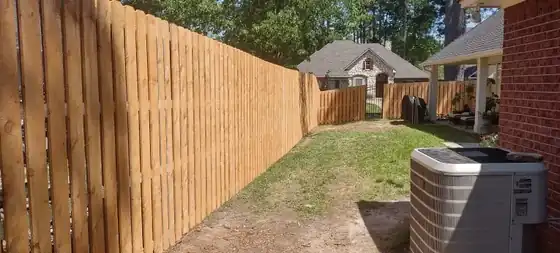
People usually call about a privacy fence for a simple reason. They want to sit in their own backyard without feeling watched, let the dog out without worrying about the street, or put in a pool with a proper enclosure. The boards are the part you see, but the work that decides whether the fence lasts is mostly underground.
C W G Fence and Decks builds privacy fences across Tyler and the towns around it. Here is what we would think about before you build one.
What a privacy fence actually does
A solid fence blocks sightlines, defines your property line, and gives pets and kids a contained space. It also takes some of the edge off street noise, since solid boards stop part of the sound that would otherwise travel straight across the yard. It will not make a busy road silent, but backyards on a main street tend to feel noticeably calmer.
It also breaks the wind in an open yard, which is something you notice on a breezy evening on the patio.
Height, layout, and what you need to check first
Most residential privacy fences stand six feet tall, which blocks the view from ground level and from most neighboring windows. Eight feet is sometimes used where more coverage is needed. But height is not only your choice. Cities often set limits on fences near the street or on corner lots, where drivers need to see, and HOAs can add their own rules.
Check with the City of Tyler and with your HOA before you pick a height. It takes a phone call and saves a real headache. We can help you think through the layout, including sloped yards, corner lots, and gate placement, but the rules for your address are worth confirming yourself.
It is also smart to know where your property line is. If you are not sure, a survey settles it, and a quick conversation with the neighbor beforehand is usually appreciated.
Clay soil and the posts under the fence
Tyler sits on soil that moves. Clay swells when it is wet and shrinks in dry spells, and a fence post is stuck in the middle of that. Posts set too shallow, or set without enough concrete, are the most common reason a fence leans after a few years.
We set posts in concrete footings, spaced to keep the rails from sagging, and deep enough to resist that movement. Water needs a way out, too. If moisture collects at the base of a wood post, it rots from the ground up, so drainage and concrete shaped to shed water matter more than most people expect.
One of our reviewers, Sandy, wrote that the fence we built for them "has steel posts (hidden behind wooden posts) that make the fence really strong to withstand high winds." It is the sort of detail you do not see from the street, and it is why the posts deserve as much of your attention as the boards.
Boards, fasteners, and East Texas humidity
Humidity and rain are hard on wood. Untreated boards soak up moisture and then warp, split, or rot, and cheap fasteners rust and stain the wood around them. Choosing rot-resistant material, using corrosion-resistant fasteners, and keeping the bottom of the boards off the ground all help the fence age better.
Board orientation changes the look and how the fence behaves. A board-on-board style has overlapping boards so there are no gaps if the wood shrinks. Side-by-side boards are simpler to build, but gaps can open as the wood dries. Ask how the boards will be set and what happens as they dry.
- Post caps that shed water protect the top of each post
- Gate hardware that latches securely and hinges strong enough to carry the gate
- Rails fastened so boards stay tight to the frame
- Boards stepped or racked to follow slopes so the line stays level
Getting the site ready
A little prep on your end helps the job go smoothly. Clear the fence line of brush, branches, and anything in the way. Move planters and furniture back. Have underground lines marked, which you can set up by calling 811 before digging, and point out sprinkler heads and drain lines along the route so the crew works around them.
Think about gates too. A walk gate near the back door and a wider one for a mower or trailer will serve you better than one gate in the wrong spot.
Timing and who shows up
Residential installs depend on the length of the fence, the number of gates, the soil, and the weather. We will give you a timeline before we begin. A reviewer, Srini Kambhampati, wrote that we were prompt and did a good job once scheduled, and advised booking well ahead because we can be several weeks out. If you have a date in mind, call early.
You will deal with the people who do the work. Reviews mention Stan, John, Eric, and Isaiah by name, and our family has more than 30 years of combined experience in fencing, decking, and outdoor construction.
To plan a privacy fence for your Tyler property, call (903) 316-3127 for a free estimate. We offer military and senior citizen discounts, and we are fully insured.
Keep reading
Restoring Damaged Fences Quickly in Whitehouse
A leaning post or a dragging gate is a small job today and a big one after the next storm, so here is what to check and what a good repair looks like.
Adding Curb Appeal with Ornamental Iron Fencing in Flint
Iron fencing frames a yard instead of hiding it, and the details you choose up front decide whether it still looks sharp in twenty years.
Have a fence or deck in mind?
Tell us what you are looking at and we will come out, measure, and give you a free estimate.